President’s Message - October 2025

Evelyn Dougherty • March 23, 2026

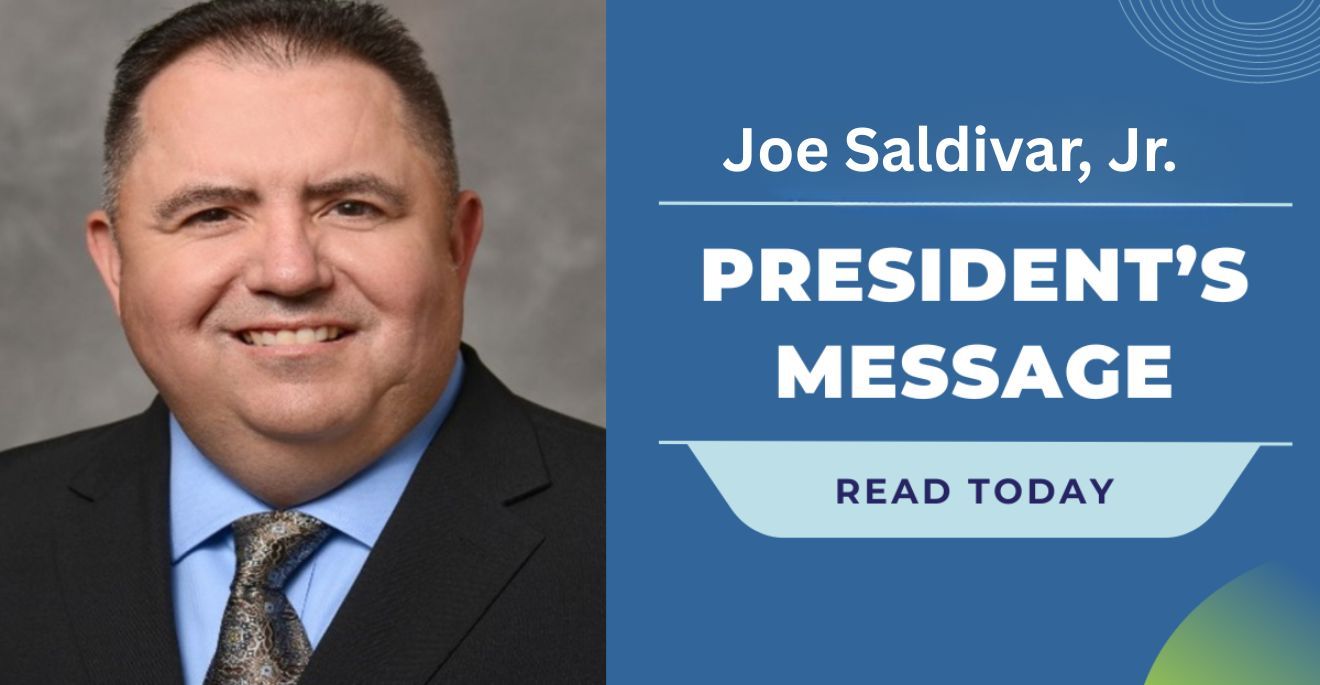
Joe Saldivar, Jr., MiSHE President

Dear MiSHE Members,


I hope this message finds you well and enjoying the summer season. We’ve had a busy and productive few months at MiSHE. I’m pleased to share that both of our recent Golf Outings—in Grand Rapids and Frankenmuth—were a great success. Thank you to everyone who participated, sponsored, and helped make these events memorable and impactful. We’re looking forward to continuing the momentum with our next Golf Outing on July 25 in Shelby. If you haven’t signed up yet, there’s still time!


Looking ahead, don’t forget to mark your calendars for our Annual Conference at Grand Traverse Resort in Traverse City 2025 MISHE Annual Conference, taking place September 22–24. This year’s conference promises to be one of our best yet, with outstanding educational sessions, networking opportunities, vendor engagement, and our keynote speaker Anthony Grupido Michigan Magician and Keynote Speaker Anthony Grupido.


I’m also excited to announce a major development for MiSHE—we’ve officially partnered with other leading regional organizations and will be attending the Midwest Healthcare Engineering Conference and Trade Show in Indianapolis from November 2–4. This collaboration expands our network, enhances our educational reach, and allows us to represent Michigan on a broader platform. We encourage you to join us in Indianapolis as we continue to elevate the voice of healthcare engineering across the Midwest. Midwest Healthcare Engineering Conference.


In addition, I’m looking forward to seeing many of you at the ASHE Annual Conference in Columbus, Ohio from July 27th – 30th. It’s always a great opportunity to connect, learn and represent MiSHE on the national stage. Health Care Facilities Innovation Conference | ASHE


As always, thank you for your continued support and dedication to our profession. Together, we’re advancing the mission of safe, efficient, and innovative healthcare facilities throughout Michigan. And on a personal note – if you’re fortunate to still have a parent or both parents in your life, please take a moment today to give them a hug.


Warm Regards,

Joe Saldivar, Jr. MSA, CHFM, CHSP, SASHE 

MiSHE President 

By Evelyn Dougherty March 23, 2026
Why staying current with code updates is critical for health care facilities Here are seven reasons facilities professionals should get involved in the code development process By Chad E. Beebe reprinted from HFM Magazine Oct 13, 2025 In the complex world of health care facilities management, staying up to date with the latest codes and standards isn’t just a best practice, it’s essential. While the Centers for Medicare & Medicaid Services (CMS) often lags in updating its Conditions of Participation (CoPs) sometimes by a decade or more, there are compelling reasons why health care professionals should actively engage with and apply the most current codes available.  1. ASHE Advocacy: A voice for practical, patient-centered code development The American Society for Health Care Engineering (ASHE) plays a vital role in shaping the codes that govern health care facilities. ASHE’s Advocacy Team and members work tirelessly to address issues as they arise, whether it’s correcting misinterpretations, removing outdated requirements, or introducing new provisions that reflect real-world challenges. Our success stems from a deep understanding of the health care environment and a commitment to improving patient care through practical, feasible code changes. Over the past decade, ASHE has tracked more than 600 code changes that positively impact health care environments. These include clarifications, conflict resolutions and proactive updates that reflect the evolving needs of facility managers. Without ASHE’s involvement, code updates would be riddled with impractical requirements and costly surprises. 2. Embracing new technology with updated codes Technology in health care evolves rapidly, and outdated codes often fail to address new innovations. This leads to confusion among authorities having jurisdiction (AHJs), who may interpret the absence of guidance in varying ways. For hospital systems operating across multiple jurisdictions, this inconsistency can create significant operational burdens. Take, for example, flexible medical gas tubing, a technology not addressed in the 2012 editions of the National Fire Protection Association’s NFPA 101, Life Safety Code, and NFPA 99, Health Care Facilities Code. However, these are the codes referenced in CMS’s CoPs. Without updated codes, facilities would not be able to use this product. Fortunately, CMS granted a categorical waiver, allowing consistent use nationwide. This underscores the importance of updated codes in enabling safe, efficient adoption of new technologies. 3. New practices require clear guidance Some may assume that if a practice isn’t addressed in a code, it’s fair game. Unfortunately, that’s rarely the case. In reality, AHJs determine compliance, and without clear code language, interpretations vary widely. This sometimes leads to unsafe or overly burdensome requirements. A prime example is the introduction of hybrid operating rooms. In the absence of specific guidance, many AHJs combined requirements for operating and imaging rooms, resulting in unnecessary mandates like access to toilet facilities and increased risks from mixing staff roles. Updated codes help avoid these pitfalls by providing clear, tailored guidance. 4. Newer codes offer solutions when older ones fall short Even when CMS mandates older code editions, newer codes can offer valuable guidance in areas not previously addressed. For instance, microgrids, which are critical for energy resilience, aren’t covered in the 2012 codes. However, newer editions provide frameworks for their safe and effective implementation. Only those familiar with current codes can identify and leverage these opportunities. 5. ASHE serves a diverse membership beyond CMS requirements Not all ASHE members are bound by CMS’s outdated codes. Many operate under state or private regulatory bodies that adopt current editions. ASHE supports these members by offering educational resources and frequent updates, ensuring they remain informed and compliant with the latest standards. 6. Code update presentations: Informing and engaging the community ASHE’s conferences and code update presentations serve dual purposes: educating attendees and gathering feedback for future advocacy. As the gap between adopted and current codes widens, member engagement becomes even more critical. Without firsthand experience of new code impacts, feedback dwindles making it harder for ASHE to advocate effectively. 7. Preventing unwanted surprises through continuous involvement Code development involves many stakeholders, each with their own interests. ASHE ensures that proposed changes are practical, feasible and ultimately beneficial to patient care. Our advocacy emphasizes simplicity, clarity and consistency, which makes codes easier to interpret and apply. ASHE also considers financial implications. For example, we successfully opposed a proposal to the International Building Code requiring equivalent underground space in hurricane-prone areas. While well-intentioned, the proposal ignored the logistical and safety challenges of relocating patients underground, as well as the prohibitive costs.
By Evelyn Dougherty March 23, 2026
ASHE Core Competencies – Training Resources Available ASHE has put together training programs for facility maintenance staff on core competencies of which many are available free to ASHE chapters. The American Society for Healthcare Engineering (ASHE) has a Core Competency Framework defining eight key areas for healthcare facility managers:  Here are the eight core competencies defined by ASHE: Administration: Leading teams, communication, documentation, and policies. Compliance: Adhering to regulations and standards. Energy Management: Strategies for saving energy and reducing costs. Finance: Understanding financial language, budgeting, and long-term value. Maintenance & Operations: Keeping facilities safe, comfortable, and functional. Project Management: Overseeing projects, including construction and renovations. Managing Risk: Assessing and mitigating physical, safety, and infection-related risks (like waterborne pathogens). Sustainability: Developing green strategies, decarbonization, and climate resilience. ASHE provides training, such as e-learning courses and live workshops, for each area, helping managers improve skills from financial literacy to developing water management plans.
By Evelyn Dougherty March 23, 2026
ASHE Core Competencies – Training Resources Available ASHE has put together training programs for facility maintenance staff on core competencies of which many are available free to ASHE chapters. The American Society for Healthcare Engineering (ASHE) has a Core Competency Framework defining eight key areas for healthcare facility managers: Here are the eight core competencies defined by ASHE: Administration: Leading teams, communication, documentation, and policies. Compliance: Adhering to regulations and standards. Energy Management: Strategies for saving energy and reducing costs. Finance: Understanding financial language, budgeting, and long-term value. Maintenance & Operations: Keeping facilities safe, comfortable, and functional. Project Management: Overseeing projects, including construction and renovations. Managing Risk: Assessing and mitigating physical, safety, and infection-related risks (like waterborne pathogens). Sustainability: Developing green strategies, decarbonization, and climate resilience. ASHE provides training, such as e-learning courses and live workshops, for each area, helping managers improve skills from financial literacy to developing water management plans.